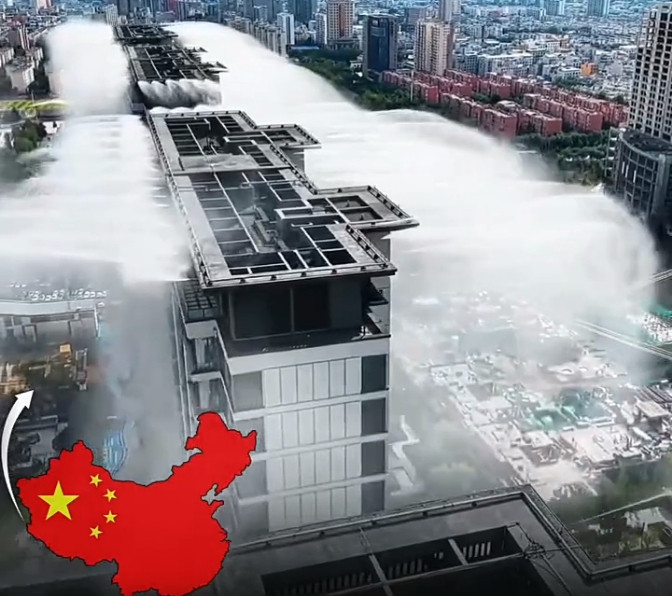
Metropolitan areas across the globe are continuously confronting severe thermodynamic challenges as rising seasonal temperatures compound the urban heat island effect. In response, modern municipal development teams in China have initiated large-scale real-world deployments of innovative Rooftop Mist Cooling Infrastructure. This technical approach treats structural cooling as a critical macro utility, systematically mitigating localized ambient temperatures within high-density commercial corridors, effectively lowering energy consumption thresholds and reducing heavy dependencies on traditional, energy-hungry mechanical air conditioning grids.
The core underlying technology governing these systems relies heavily on the mechanical principles of flash evaporation. By routing pressurized water arrays through micro-engineered high-pressure nozzles situated along skyscraper perimeters, the system generates an ultra-fine mist configuration. As these microscopic moisture droplets intersect with the warm atmospheric boundary layer, they evaporate almost instantaneously. During this thermodynamic phase transition from liquid to vapor, the water molecules extract heavy thermal energy directly from the surrounding air. This process drops local tracking environment temperatures by as much as 8°C without producing residual liquid precipitation on streets or pedestrian walkways below.
From a resource sustainability perspective, these high-efficiency evaporative networks represent a massive improvement over standard condenser-based cooling systems. Flash-misting grids consume significantly less electrical bandwidth, relieving stress on regional power distribution configurations during peak load hours. Nevertheless, the scalable long-term viability of this architectural design remains subject to critical geographic variables. The evaporative efficiency curve drops sharply in environments with high relative humidity, where the air is already saturated with water vapor. Additionally, long-term system execution must balance continuous clean water resource allocations, nozzle calcification prevention protocols, and ongoing municipal maintenance expenditures to ensure lasting operational sustainability across expansive urban centers.