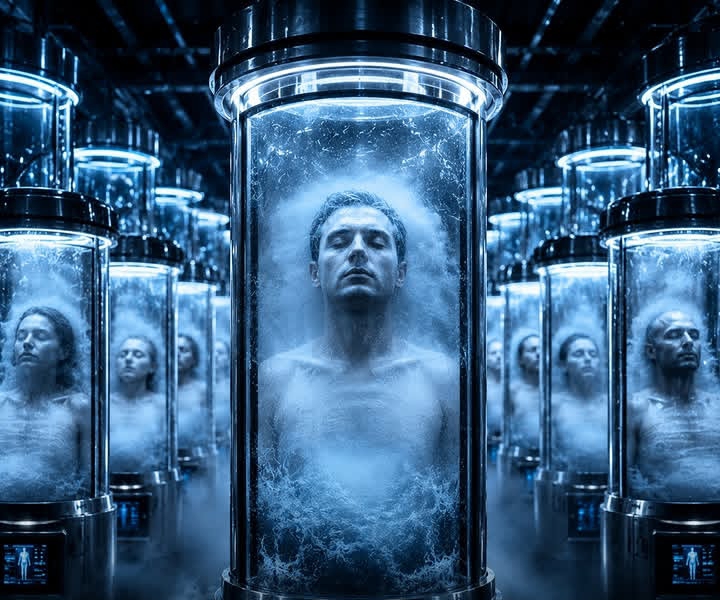
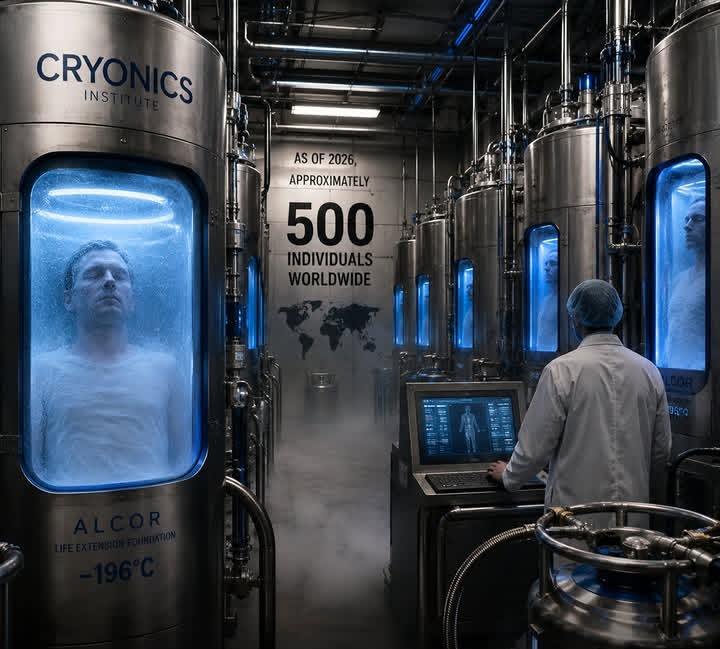
The concept of freezing human bodies for future revival has officially transitioned from the realms of science fiction into real-world laboratory application. Today, over 300 people around the world have chosen cryopreservation, seeking a literal second chance at life.
The vast majority of these individuals are currently stored at specialized, high-tech facilities located in Arizona and Michigan, where they await the medical and technological breakthroughs of tomorrow.But what exactly drives this futuristic movement, how does the technology work, and why are thousands more investing their life savings into it? Let us dive deep into the fascinating world of cryonics.
How the Vitrification Process Works
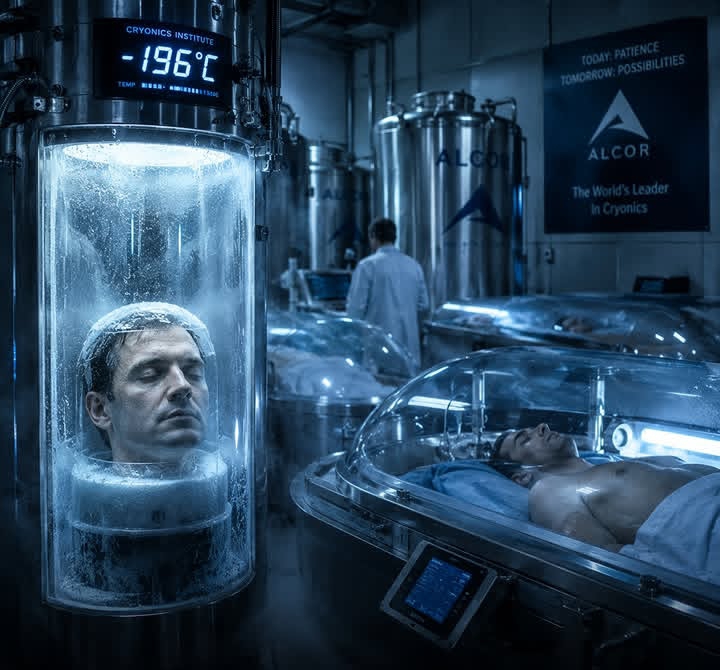
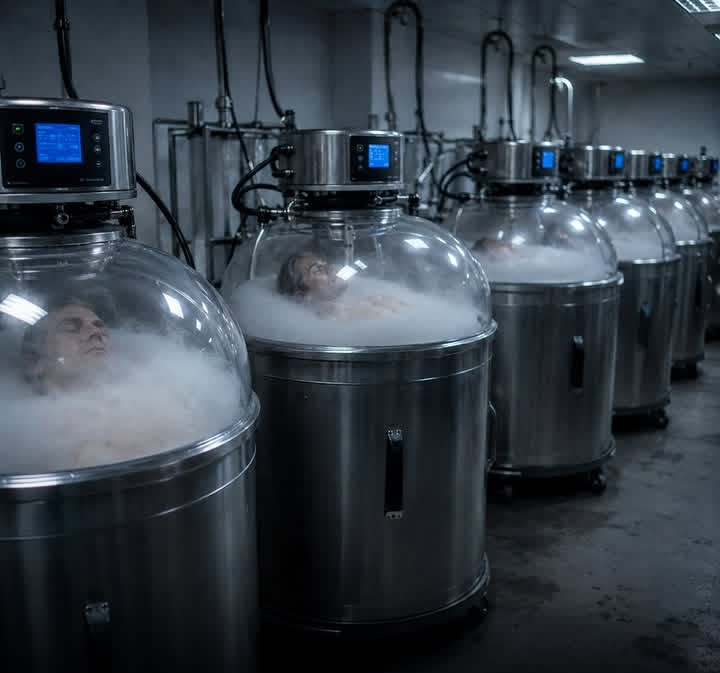
A common misconception is that cryopreservation is just "freezing" someone in a block of ice. In reality, ordinary freezing would expand water inside the cells, causing sharp ice crystals to rupture cell membranes and destroy tissue. To prevent this, scientists utilize a complex biochemical technique.Immediately after a person is declared legally dead, medical teams begin the preservation process. The patient's body or brain is cooled, and their blood is replaced with specialized cryoprotective chemicals—essentially a medical-grade antifreeze. Their bodies or brains are then safely preserved at an ultra-low temperature of -196°C using vitrification.Vitrification hardens the tissue into a glass-like state without forming any damaging ice crystals. Once stabilized, the patients remain inside giant
liquid nitrogen-filled containers known as dewars. These advanced vacuum containers are designed to stay safely cold without relying on electricity, ensuring total safety even during power grid failures.
Famous People Frozen in Time
The choice to undergo cryopreservation is not exclusive to eccentric billionaires; it includes prominent figures from sports, technology, and mainstream science. Among those preserved are baseball legend Ted Williams, Bitcoin pioneer Hal Finney, and cryonics founder Robert Ettinger himself.These pioneers are joined by hundreds of others from all walks of life who share the exact same hope: that future technology will eventually be capable of repairing the ailments that took their lives, alongside any cellular damage caused by the preservation process itself.
The Financial Cost of Eternity
Signing up for cryopreservation is a significant financial investment. Currently, the cost ranges anywhere from $28,000 to over $200,000, depending on whether a patient chooses "neuro-preservation" (preserving just the brain) or full-body preservation.Most participants do not pay this out of pocket; instead, they fund it using life insurance policies, naming the cryonics facility as the primary beneficiary. This financial model has made the option accessible to middle-class individuals who view it as a logical, low-risk lottery ticket for the future.
The Scientific and Ethical Debates
While the preservation technology itself is sound, the "revival" aspect remains highly controversial within the mainstream scientific community. Skeptics point out that while we can successfully vitrify and revive simple cells, insects, and certain small organs, reviving a complex human brain with intact memories is an entirely different challenge.Ethicists also raise questions about the legal status of cryopreserved individuals. Are they legally dead, or are they simply patients in a long-term, high-tech coma? Furthermore, if revived centuries from now, how would these individuals adjust to a vastly different human society?
The Future of Revival and Medical Technology
While there is currently no medical evidence that human revival is possible, the industry continues to grow rapidly. In fact, thousands more have already signed up and paid their dues for the procedure.These individuals are placing their ultimate faith in future advances in nanotechnology, artificial intelligence (AI), and regenerative medicine. The hope is that microscopic nanobots will one day navigate through vitrified tissue, repairing cellular decay and reversing the aging process, ultimately bridging the gap between death and a second life.
Disclaimer: The information provided in this article is for educational and informational purposes only.
Cryopreservation and cryonics are experimental procedures, and there is currently no scientific or medical consensus confirming that human revival is possible with existing or future technology. Always consult with certified medical, legal, and financial professionals before making any long-term life insurance or end-of-life decisions.